

Federal prudential banking regulators from the Federal Reserve, OCC, FDIC and NCUA appeared before the U.S. House Financial Services Committee today. The hearing, “Oversight of Prudential Regulators,” examined recent rulemakings and activities, including changes to the capital framework, regulatory tailoring, fraud and scam mitigation and bank supervision.
Here are some takeaways from the hearing:
1. Tailoring regulations to the size, complexity and risk of an institution remains a key priority for lawmakers and regulators.

Chairman French Hill (R-AR): Vice Chairman Bowman, the committee recently sent a letter to the regulators to support what you’re doing, using your existing statutory authorities to further tailor the application of enhanced prudential standards for category two, three and four banks, as well as to index regulatory thresholds for those categories. Is this something that you expect you and your colleagues to undertake, and what are you thinking about [in] terms of sequencing that in the timing?
Vice Chair Miki Bowman: Thank you, Chairman Hill. That’s a very important issue, and I think over the years, I have strongly supported the concept of tailoring regulation to the size, complexity and risk of institutions. I do plan to review our tailoring framework and our approach to ensure that it has the intended effect that Congress intended in S.2155 and we are evaluating indexing the thresholds, as we are considering broadly our work on the regulatory framework.
2. Regulatory pressures should not inhibit banks’ ability to work with customers engaged in lawful business activities.

Rep. Brad Sherman (D-CA): Can I hear from each of the regulators that you are not telling the banks you regulate or the credit unions you regulate that they will be disfavored because they provide transactions accounts to businesses that are unpopular on the left, the right or somewhere else. Let’s go down the list. Ms. Bowman, can you assure us there’s no Choke Point going on here?
Vice Chair Miki Bowman: It’s very important that all Americans have access to financial services, especially if they’re engaged in legal activities, and if they are engaged in disfavored activities, that should not disqualify them from banking services. So, we are very cautious and reviewing our actions over the past few years to ensure that we were not engaged in those activities.
3. Regulators acknowledge supervisory actions should be tied to material financial risks rather than regulatory box-checking.

Rep. Mike Flood (R-NE): Additionally, as part of the OCC/FDIC proposal, Matters Requiring Attention or MRAs must be tied to circumstances posing material harm to the financial condition of the institution, or a material risk of loss to the Deposit Insurance Fund. Quickly, for both of you. I know you both feel strongly [that] this change will ensure the MRAs remain closely tethered to the types of material risks that are the core of safety and soundness. How do you ensure this change doesn’t go too far and tie the hands of examiners when they see genuine material problems within an institution?
Comptroller Jonathan Gould: Well, again, I think it ties into material financial risks, which are the risks that we really can’t afford to miss. But of course, supervisors have other tools available, including the ability to still cite banks for actual violations of law.
Rep. Mike Flood (R-NE): Chairman Hill?
Acting Chairman Travis Hill: We put a lot of thought into how the definitions were worded and how they were described in the preamble of the proposal. It’s a proposal now. We are receiving comments. Look forward to getting the comments back, but we’ll certainly want to make sure we are striking the right balance, in whatever the final rule is.
4. Well-calibrated capital requirements will help to address Treasury market liquidity and enable banks to support the economy.

Rep. Frank Lucas (R-OK): On that same topic, the government shutdown, quantitative tightening and a reluctance to use the Fed standing repo facility have raised concerns about reduced liquidity in the Treasury market. Vice Chair Bowman, as you finalize the Basel Endgame proposal, how will you keep in mind the implications of the capital requirements on Treasury market liquidity and functioning, given the Fed’s report that the banking system is well capitalized. Do you expect to increase capital levels?
Vice Chair Miki Bowman: We’re currently in the process of reviewing the capital framework by looking at all four of the pillars of capital, including SLR, which we’ve just finalized and addressed. As my colleagues mentioned. We jointly proposed the CBLR, which is designed to help community banks. It’s critically important that whatever the frameworks are that we create, the other pillar that we’re working on and reviewing is stress testing, which we’ve introduced a few proposals on this year. The GSIB surcharge will be a part of that, as well as the Basel III proposal that we are currently engaged in working on. It’s critically important that all of the work that we’re doing does not result in impairing the ability of the banks and the economy to support the Treasury market and its functioning. So we’re certainly attuned to any risks that might be presented by the calibration of those proposals.
5. Periodic updates to anti-money laundering reporting thresholds can ensure these frameworks remain effective and appropriately targeted.

Rep. Barry Loudermilk (R-GA): Chair Hill, I know that you devoted a portion of your testimony to reform proposals related to the Bank Secrecy Act and specifically to allow institutions to reallocate resources away from lower value reporting to higher reporting. I have been working on this, especially with the Bank Secrecy Act, and adjusting the financial reporting threshold. And in fact, my bill is entitled The Financial Reporting Threshold Modernization Act, which would increase the currency transaction report from the grossly outdated $10,000 number to a $30,000 threshold, but index that to inflation going forward. Is an idea like this one that aligns with your goal to alleviate the reporting burden on financial institutions of all sizes?
Acting Chairman Travis Hill: Sure. Thank you for the question, Congressman. So, as you know, those thresholds have not been changed for many years, and the amount of reports that are filed by financial institutions is extremely large. So, I think taking a close look at this makes a lot of sense. Those regulations are under the purview of the Treasury Department, so we defer to them on the specifics, but I think this makes a lot of sense as something to look at.
6. Vulnerable populations are facing growing threats from fraud and scams.
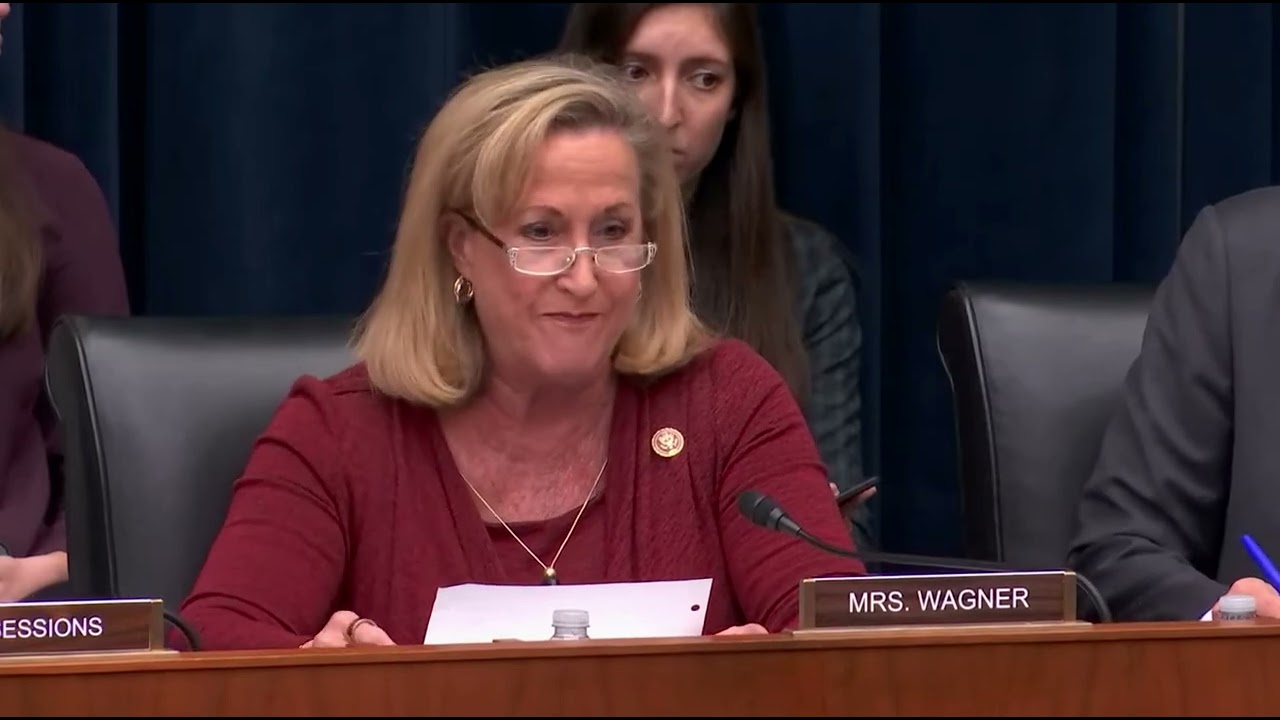
Rep. Ann Wagner (R-MO): Throughout my time in Congress, one of my top priorities has been to protect our most vulnerable from financial exploitation and fraud. As part of my work as chairman of the Capital Markets Subcommittee, I have been very proud to champion the Financial Exploitation Prevention Act, which would provide a powerful tool to protect senior investors and ensure that their retirement accounts are safe when they need them the most. Vice Chair Bowman, you have spoken often on the issue of fraud, and in particular check fraud, which has grown substantially over the past several years. In 2022, financial institutions filed 680,000 suspicious activity reports or SARs related to check fraud, an increase of over 700% from just a decade earlier. While checks use has decreased in recent years, around three-quarters of retirement-age individuals still use them regularly. You highlighted that while check fraud has been a well-known problem for several years, regulators have been slow to address the harm that it does to banks, especially community banks, as well as consumers and businesses that are oftentimes its victims. What actions do you think regulators themselves can take to address check fraud, and what areas, if any, would require congressional action?
Vice Chair Miki Bowman: Well, thank you for addressing that very important issue. As a former community banker, I recognize that every time I speak with community bankers, this is one of the top issues that they continue to bring up year after year. So, one of the first actions that I took as the Vice Chair for supervision was to move forward with my colleagues in an interagency request for information to the public about check fraud and payments fraud more generally. So, we’re in the process of reviewing those comments. We’ve formed a working group, and our intention is to expand that to other areas of the administration, so that all of those that may have some sort of authority over the activities that are a part of reviewing check fraud or fraudulent activity can come together to understand how we can take better action and mitigate.
7. Regulators plan to engage in a holistic review of capital requirements to align capital requirements with actual risk.
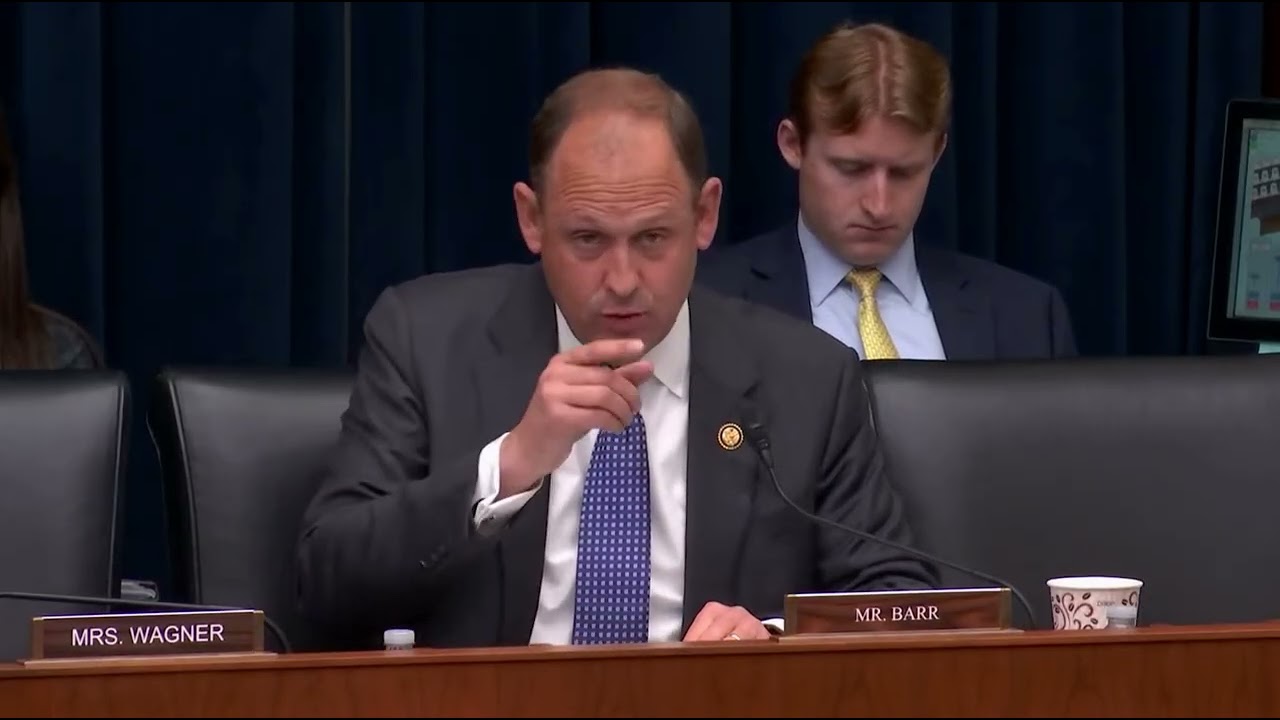
Rep. Andy Barr (R-KY): Last Congress, many of my colleagues and I worked tirelessly to bring to light concerns with the Basel III Endgame proposal, including traveling to Switzerland to speak to the Basel Committee, where they agreed with members of Congress, a bipartisan delegation that the US proposal from your predecessor, Vice Chair Bowman, proposed gold plating requirements on American financial institutions compared to their global peers. Fortunately, that proposal was never finalized, and the Fed, OCC and FDIC plan to reintroduce a rulemaking in 2026. To all of the bank regulators here, Vice Chair Bowman, Comptroller Gould and Acting Chair Hill, will you commit to undertaking a holistic review of the capital stack to account for double counting and other duplicative capital regulations on US firms? We can just go down the line.
Vice Chair Miki Bowman: Absolutely, we’re doing that now.
Comptroller Jonathan Gould: Yes.
Acting Chairman Travis Hill: Yes.
Rep. Andy Barr (R-KY): Are the agencies planning to issue a proposal that predetermines a, quote, capital neutral outcome, even if some risks continue to be overcapitalized?
Vice Chair Miki Bowman: We don’t have a preconceived notion about where we’ll land with our capital requirements based on this review, this holistic, this comprehensive review of capital that we’re undertaking now, we’re looking at it from a risk-based approach by each factor and category.
8. Supervisory ratings should reflect a holistic view of a bank’s financial condition rather than relying on a single component score.
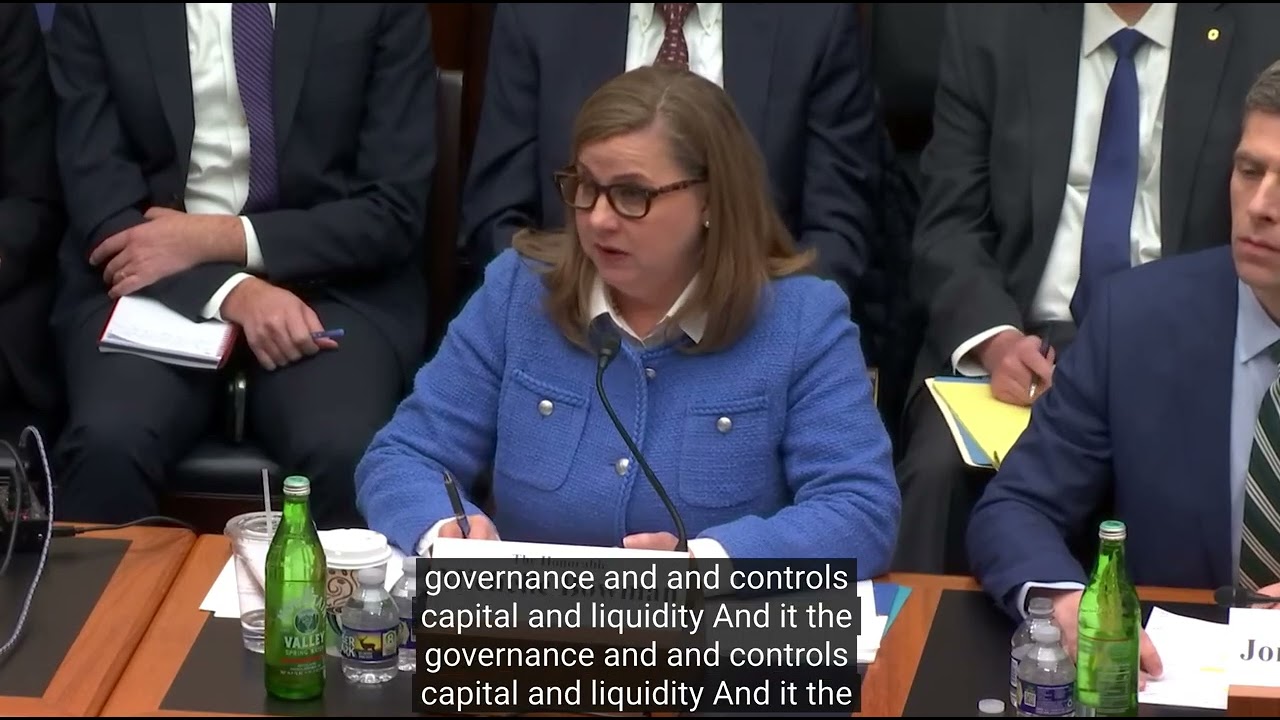
Rep. William Timmons (R-SC): Vice Chair Bowman, I would like to begin with you the Federal Reserve’s recent finalization of revisions to the large financial institutions ratings framework is viewed by many as a common sense and long overdue improvement. Ensuring that banks are not judged solely on their single lowest component score will create a more accurate and balanced assessment of institutional health. Could you speak to the Federal Reserve’s plans to implement this reform and how we should expect it to be faithfully and consistently implemented by examiners?
Vice Chair Miki Bowman: Thank you for allowing me to provide some additional information and context to our large bank financial rating system. So, when the system was initially introduced in 2019, it allowed for a single deficiency. There are three categories that consists of governance and controls, capital and liquidity. And the initial framework allowed for a deficiency in one of those categories, not requiring it to be as a financial matter, but any of those categories could determine a bank to be not well managed, as we know and as we saw in Silicon Valley Bank’s failure. Banks fail for a number of reasons that are highly predictable and always related to their financial condition. So it’s important that we’re not artificially judging an institution to not be well managed if we’re not reviewing their financial health as a part of that determination.
9. The proposed “unsafe and unsound” definition would have helped identify material risks prior to SVB’s failure, according to the regulators.

Rep. Mike Flood (R-NE): On October 7, the OCC and the FDIC published a Notice of Proposed Rulemaking where you were defining “unsafe or unsound practice” under Section Eight of the FDIC Act. Comptroller Gould, let’s start with you. A definition you have jointly proposed in 2022 – do you feel it would have changed the way examiners would have been looking at the Silicon Valley Bank before its demise?
Comptroller Jonathan Gould: I do that level of embedded interest rate risk on that bank’s balance sheet sure seems to me like a material financial risk.
Rep. Mike Flood (R-NE): Acting Chairman Hill?
Acting Chairman Travis Hill: I would agree. I think the SVB experience is one of the key inputs into the motivation to reorient our focus. And so the full intent would have been for the focus to have been different.
10. Regulators are taking steps to enhance the cybersecurity of their agencies after the OCC disclosed a major breach in April.

Rep. Joyce Beatty (D-OH): I’d like to start with some questions on cybersecurity. We’ve addressed that a lot today and the risk posed by third-party service providers and other technology solutions as we know, cyber adversaries not only target financial institutions, but also federal regulatory agencies. What are the steps you’re taking to enhance the cybersecurity of your agencies and effectively notify financial institutions when there’s a breach of confidence and sensitive information that regulators collect from financial institutions. Okay, you want me to pick somebody?
Comptroller Jonathan Gould: I’d be happy to start since I certainly raised the issue. And unfortunately, the OCC was the victim of a data breach that went on for almost two years. When we learned of the breach, back in February, we engaged extensively with the banks that we supervised to let them know what we were doing, how we were addressing it, what information was exposed. I will say that in addition to bringing on board multiple kinds of forensic technical experts to analyze the issue and to make recommendations to ensure that the risk of this happening again is dramatically decreased. I actually turned our own examiners on our agency to examine us, as they would a bank, to ensure that we had actually made the changes that the third party had recommended, the forensic consultants have recommended.


